
The Silence of Truth: Reflections on How to Make a Killing
LESSONS FROM MOVIES
Prince Leunado
5/1/20263 min read
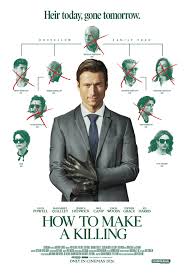
I recently sat through How to Make a Killing, and honestly, it felt less like a movie and more like a fever dream about the worst parts of human nature. You go in thinking it’s just another “eat the rich” thriller, but it turns into a suffocating moral maze that clings to your soul long after the credits roll.
The story follows Becket Redfellow, played with chilling, hollow-eyed desperation by Glen Powell, sitting on death row. With only four hours left before his execution, he calls for a priest. But this isn’t a “save my soul” confession; it’s a “let me tell you how I won” confession.
As Becket recounts how he systematically erased his own family for a $28 billion inheritance, the most disturbing part isn’t the violence, it’s the silence. Father Morris sits across from him, absorbing every detail of cold-blooded murder, knowing exactly what he’s hearing, yet unable to react.
I kept waiting for the priest to break, to stand up, to shout, “This man is a monster!” But he couldn’t. And that was the moment that broke me.
I went online afterward to understand why a priest couldn’t simply report such a confession. What I found was both fascinating and unsettling.
There’s something called the Sacramental Seal, a rule that means whatever is confessed to a priest must remain completely confidential. Not “keep it private,” not “be careful who you tell,” but absolute silence. Once it’s said in confession, it dies there. The priest becomes a vault.
If he speaks, he risks being cut off completely from the Church. And beyond that, there’s also clergy–penitent privilege, where even the law protects that silence. So the priest isn’t just morally bound; he’s legally shielded from revealing anything.
Watching Father Morris’s face crumble as he realizes he’s now the only person on Earth who knows the full truth, and that he must carry it forever, was haunting.
Because at that moment, everything flips.
You think Becket is the one facing punishment. But by the end, when he walks out of those prison gates and into the arms of the predatory Julia Steinway, it doesn’t feel like freedom anymore. It feels like he’s stepping into something darker, something he may not even control.
And the priest?
He remains behind, alive and free, yet carrying a truth he can never speak.
That’s when it hit me: sometimes the burden of truth can stand in the way of justice.
It reminded me of Ecclesiastes 1:18,
“For in much wisdom is much grief, and he who increases knowledge increases sorrow.”
Father Morris knew the truth, but he couldn’t act on it. He became a prisoner of righteousness, bound by duty, yet tormented by conscience.
And Becket? He may have escaped execution, but he walked straight into another kind of judgment, not one handed down by the law, but one shaped by his own nature. Galatians 6:7 says,
“Do not be deceived: God is not mocked. For whatever a man sows, that he will also reap.”
That verse echoed through my mind as the credits rolled.
The film left me uneasy, not because of what I saw, but because of what I understood.
It reminded me that silence can be holy, but it can also be heavy.
That truth can save, but it can also scar.
Sometimes, the hardest part of righteousness is carrying what you cannot speak.
And sometimes, the most terrifying punishment isn’t death, it’s living with the knowledge of what you’ve done.
Romans 2:16 says,
“This will take place on the day when God judges people’s secrets through Jesus Christ.”
That’s the final courtroom, the one no human law can silence.
About the Author
Prince Sani Emmanuel Grace is a writer, youth mentor, and founder of Catch Them Young Bible Club (CTYBC), a faith-based initiative dedicated to nurturing godly values in children and teenagers. With years of hands-on experience in outreach programs since 2014, he is passionate about shaping young minds through teaching, mentorship, and practical life lessons.
He is the voice behind Moment of Truth with Leunado, where he shares insights on life, faith, growth, and society. As an advocate for intentional parenting and youth development, he also runs Guiding Little Feet, a platform focused on raising children with strong moral and spiritual foundations.
Emmanuel blends storytelling, real-life experiences, and biblical truths to inspire change and build a generation rooted in purpose, character, and faith.


150+
15
Trusted Mentor
Faith Leader